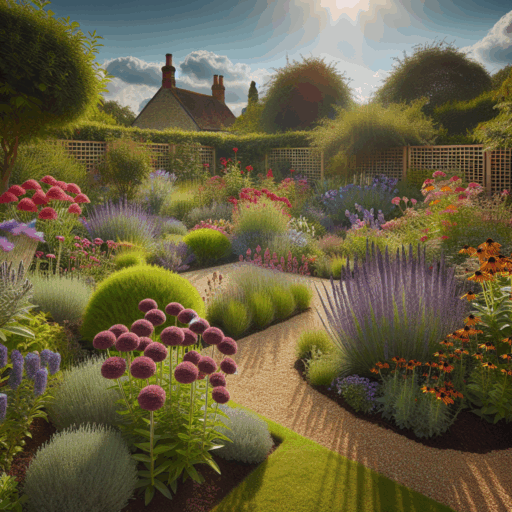
Creating drought-tolerant flower beds doesn’t mean compromising on beauty or biodiversity. For UK gardeners, these vibrant, low-water beds can flourish even through dry spells while supporting pollinators like bees, butterflies and hoverflies.
Why Choose Drought-Tolerant Flower Beds?
With changing weather patterns and increasing summer droughts, water-wise gardening is becoming essential. Choosing plants tough enough for dry conditions not only conserves water but also reduces maintenance.
Best Drought-Tolerant Plants for Pollinators
- Lavandula angustifolia (Lavender) – thrives in full sun and attracts bees.
- Echinacea purpurea (Coneflower) – late-summer colour beloved by butterflies.
- Verbena bonariensis – tall, airy, and irresistible to pollinators.
- Achillea millefolium (Yarrow) – robust, long-blooming, supports many insects.
- Salvia nemorosa – adds rich purple colour, adored by bees.
Designing a Water-Wise Flower Bed
1. Plan Your Layout
Group plants with similar watering needs and ensure the tallest varieties are at the back or centre for structure. Choose a sunny, well-draining spot.
2. Improve Soil Drainage
Add grit or coarse sand to clay soils for better drainage. Incorporate organic matter to help retain enough moisture for roots during dry periods.
3. Mulch for Moisture Retention
Apply a 5cm layer of gravel or bark mulch to reduce evaporation and keep weeds down.
4. Smart Watering Practices
- Water deeply but infrequently to encourage deep root growth.
- Install a drip irrigation system for efficiency.
- Water early morning or evening to reduce losses from evaporation.
Supporting Pollinators Year-Round
A truly wildlife-friendly, drought-tolerant flower bed offers nectar throughout the seasons. Combine early spring species like Pulmonaria with summer stalwarts such as Coreopsis, finishing with autumn blooms like Rudbeckia.
Finishing Touches
Use decorative gravel pathways and rustic edging to define the planting zones. Add a shallow water dish with stones for bees to safely drink. Incorporate native wildflowers where possible to enhance ecological benefit.
Key Takeaways
- Focus on tough, nectar-rich plants to attract pollinators.
- Improve soil and mulch to conserve water.
- Combine structural interest with seasonal colour variation.
By designing drought-tolerant flower beds for pollinators, UK gardeners can enjoy a colourful, resilient, and eco-friendly display that thrives even in dry summers.

